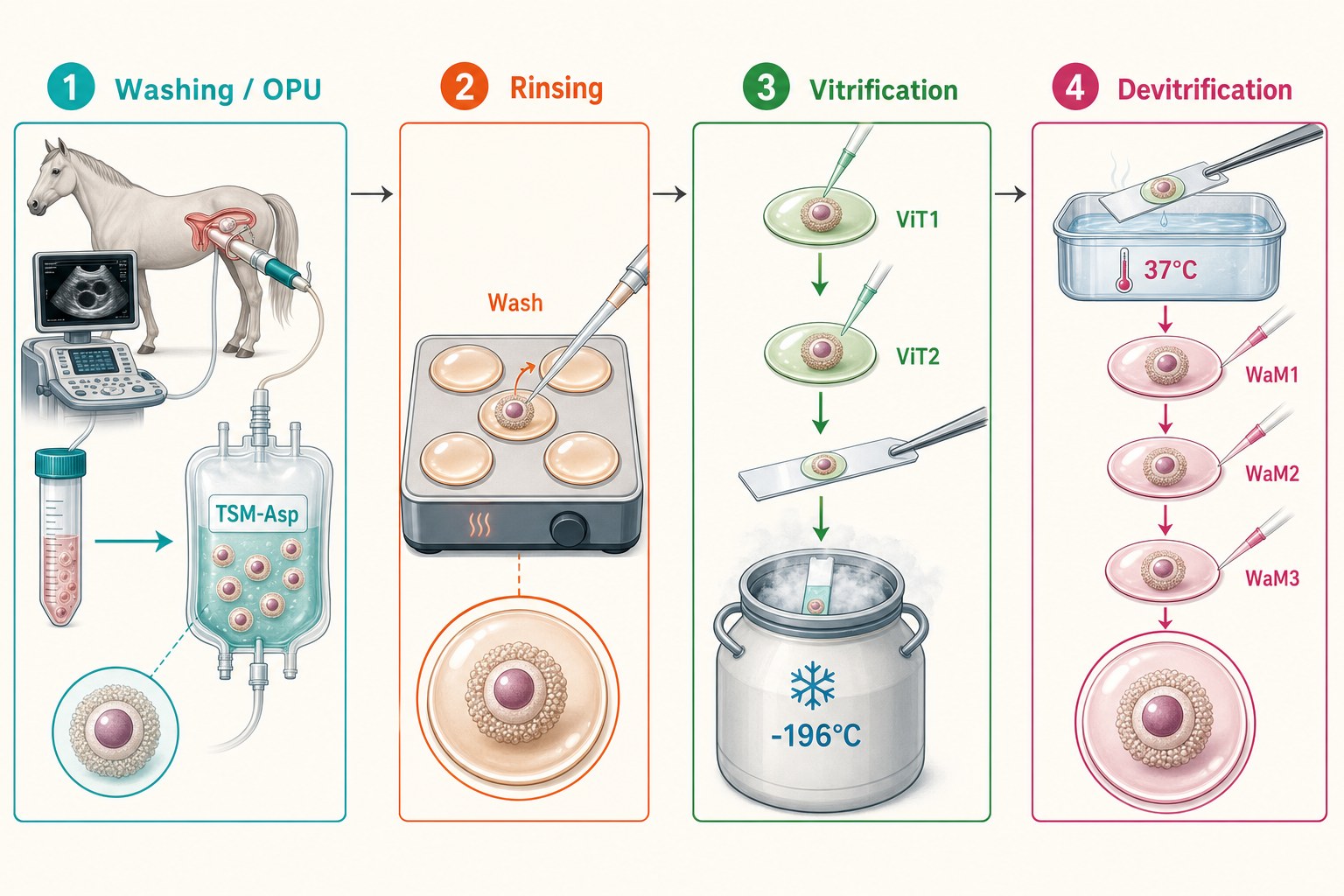
The ZOOEMBRIO protocol is built around four sequential stages. Each medium addresses a specific task at a defined point in the process.
Advantages of oocyte collection and washing technology
Transvaginal oocyte aspiration (OPU) followed by washing is the foundation of the equine in vivo protocol
Equine breeding increasingly relies on technologies that preserve and pass on genetics from valuable mares without the classical path of breeding, pregnancy and embryo flushing. The in vivo protocol with transvaginal oocyte aspiration (OPU) provides direct access to gametes from the ovary of a live mare — without requiring her to be bred and carry an embryo.
For breeding farms, reproductive centers and owners of performance mares, this opens practical options: collect oocytes from outstanding donors in a convenient seasonal window without interrupting competition careers or overloading the uterus with repeat pregnancies. Cells can be vitrified and stored in liquid nitrogen, while fertilization and transfer are scheduled around recipient mares and laboratory capacity. Success of the entire program starts at the first laboratory step — high-quality washing in a specialized medium. The ZOOEMBRIO line covers the full post-aspiration cycle: from washing and rinsing to vitrification and devitrification.
1
Genetics from valuable mares without pregnancy
Oocytes are collected from champions and leading broodmares without the burden of carrying offspring. The donor can keep competing, attend selection events or remain available on a limited schedule while her genetic material stays accessible for the breeding program.
2
Suitable for performance mares
Aspiration is scheduled between events or outside the competition season. The procedure takes 30–40 minutes under sedation; the mare can return to training afterward. For sport horse producers, this is a way to combine athletic careers with breeding work.
3
A solution for problem mares
When conventional reproduction fails — chronic endometritis, age-related changes, reproductive tract injuries, low fertilization rates — direct oocyte collection from the ovary opens a path to continue the line without giving up valuable genetics.
4
Flexible year-round planning
Aspiration is performed when follicles of suitable size are present, without strict dependence on a single ovulation day. Repeat procedures are possible at 2–3 week intervals. A breeding farm can distribute laboratory and recipient workload across the full season.
5
Cryopreservation and logistics
Oocytes and embryos are vitrified and stored in liquid nitrogen for transfer at a convenient time — including another region or the next season. This removes the need for tight synchronization between donor and recipient mares and simplifies logistics for large breeding programs.
6
Washing quality determines the outcome
After aspiration, oocytes are highly sensitive to medium composition, temperature and handling time. Proper washing in TSM-Asp preserves cell morphology and sets the success of the entire subsequent protocol — rinsing, vitrification and devitrification. Media for each stage must therefore work as a coordinated system.
That is why every step after aspiration requires a specialized medium. Below is a detailed description of each stage of the ZOOEMBRIO protocol.
The ZOOEMBRIO product line covers the full cycle: washing, rinsing, vitrification and devitrification. For each stage — a detailed process description and the recommended medium.
Diagram of oocyte aspiration from the mare ovary and washing in TSM-Asp medium
1
TSM-Asp
Stage 1 Oocyte washing
What it is
An oocyte is the female gamete that matures inside a follicle in the mare's ovary. In the in vivo protocol, oocytes are collected by transvaginal aspiration: an ultrasound probe and aspiration needle are introduced transrectally, follicles are punctured and follicular fluid with cells is collected. Washing is the separation of oocytes from this fluid and cellular debris in a specialized medium to keep cells viable.
How the stage is performed
The mare is prepared: sedated, restrained and cleaned for the procedure.
Under ultrasound guidance, ovarian follicles are punctured and contents aspirated into a tube with a small volume of medium.
Follicular fluid is transferred to a container with TSM-Asp medium — it supports oocytes during search and selection.
Oocytes are located under a microscope, moved to fresh TSM-Asp and washed free of follicular fluid residues.
Selected oocytes are cultured or passed directly to the next stage — rinsing.
TSM-Asp
TSM-Asp is supplied in 1000 and 3000 ml infusion bags — convenient for washing large volumes of follicular fluid without frequent transfers.
Diagram of oocyte rinsing in Wash medium droplets
2
Wash
Stage 2 Oocyte rinsing
What it is
After washing, traces of follicular fluid, granulosa cells and other components remain on the oocyte surface. Rinsing is a series of brief transfers through fresh medium portions to remove these residues and prepare the oocyte for vitrification or further culture.
How the stage is performed
Oocytes are moved from TSM-Asp into a droplet of Wash medium on a pre-warmed plate.
Cells are rinsed by transferring to the next Wash droplet without allowing droplets to dry.
Typically 3–5 transfers are performed until the oocyte is clear of visible attached material.
After rinsing, oocyte quality is assessed (maturation stage, morphology) and candidates for freezing are selected.
Prepared oocytes are passed to the vitrification stage.
Wash
Wash is available in 50 and 100 ml vials — a practical format for laboratory work with pipettes and droplets on a warming stage.
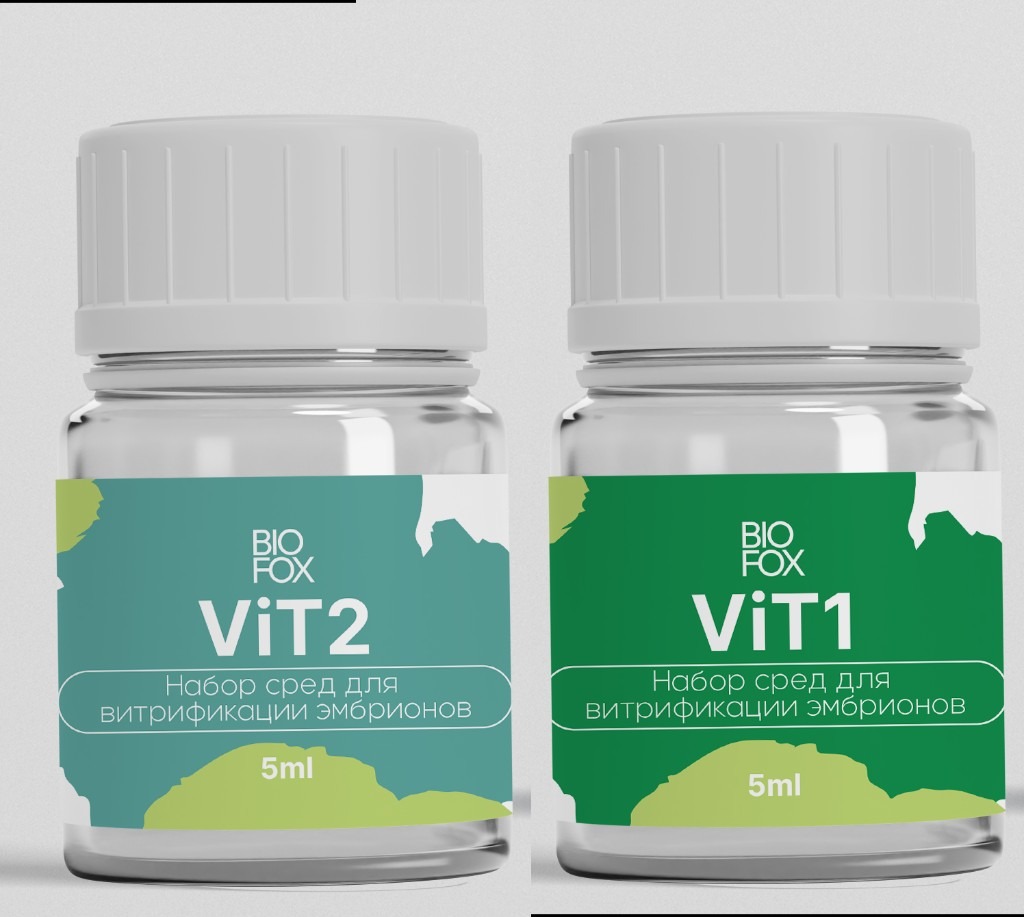
ViT1 and ViT2 media kit for embryo and oocyte vitrification
3
ViT1 / ViT2
Stage 3 Freezing (vitrification)
What it is
Vitrification is ultra-rapid freezing in which the cell enters a glass-like state without ice crystal formation. This allows equine oocytes and embryos to be stored long-term in liquid nitrogen (−196 °C) with high survival after devitrification.
How the stage is performed
Oocytes are equilibrated in ViT1 medium — it prepares the cell for cryoprotectant exposure.
The cell is transferred to concentrated ViT2 medium for a short time (seconds).
The oocyte is quickly loaded onto a cryotop or into a cryostraw and immediately plunged into liquid nitrogen.
Frozen cryotops are placed in a cryostorage tank for long-term storage.
Each ViT1/ViT2 batch is prepared and used according to protocol with temperature and exposure time control.
ViT1 / ViT2
The ViT1 + ViT2 kit is a two-step system: first medium for equilibration, second for final vitrification.
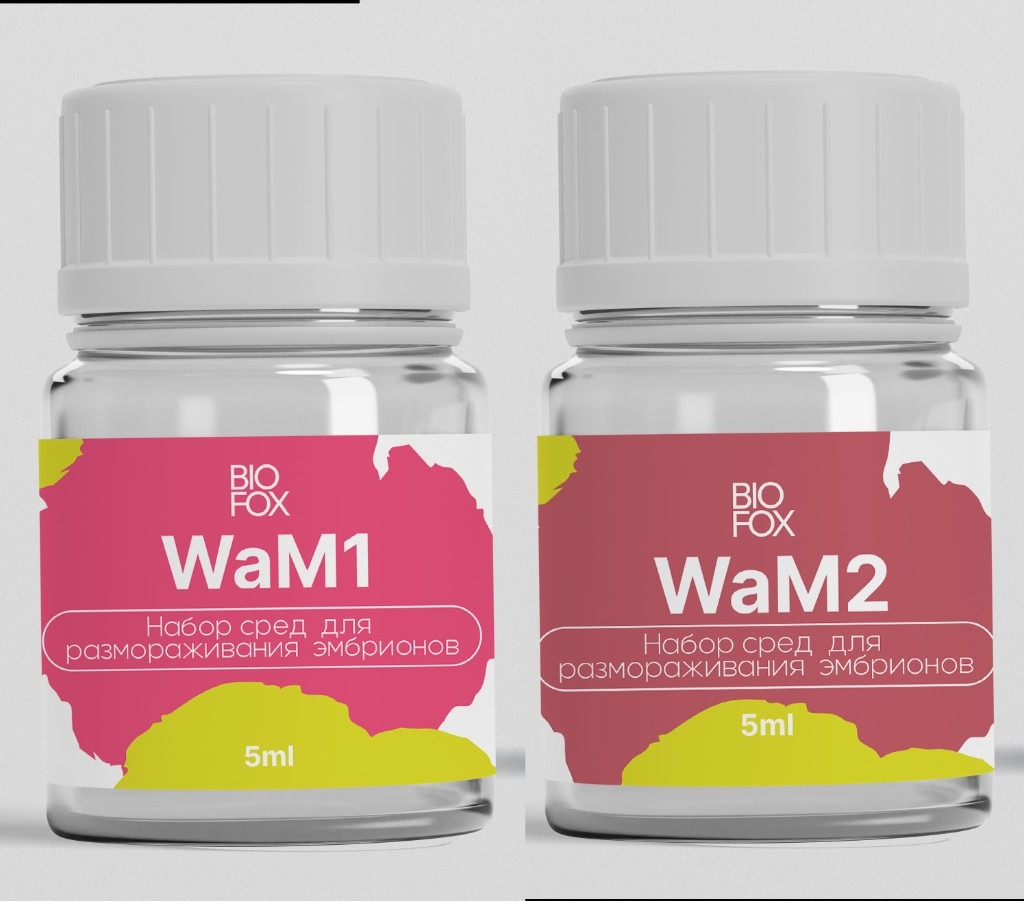
WaM1 and WaM2 media kit for embryo and oocyte devitrification
4
WaM1 / WaM2 / WaM3
Stage 4 Devitrification
What it is
Devitrification is the reverse of vitrification. The frozen oocyte is removed from liquid nitrogen, rapidly warmed and stepwise recovered from cryoprotectants into working medium. The goal is to restore cell viability for culture, fertilization or transfer.
How the stage is performed
The cryotop is removed from liquid nitrogen and immediately immersed in a 37 °C water bath for several seconds.
The oocyte is transferred to WaM1 medium — it begins cryoprotectant removal.
Sequential transfers through WaM1, WaM2 and WaM3 portions with controlled exposure times.
After devitrification, oocyte morphology and suitability for further use are assessed.
Recovered oocytes are used in fertilization or culture programs.
WaM1 / WaM2 / WaM3
The WaM1 + WaM2 + WaM3 kit provides a smooth transition of the cell from vitrified state to working medium without osmotic shock.
All manipulations must follow temperature control and standard laboratory practices. Media require appropriate equilibration before use.
Technology FAQ
Which stages does the ZOOEMBRIO equine protocol cover?
+
Four stages after aspiration: washing (TSM-Asp), rinse (Wash), vitrification (ViT1/ViT2) and warming (WaM1/WaM2/WaM3).
What is TSM-Asp?
+
TSM-Asp is a washing medium for oocyte aspiration and primary follicular-fluid handling. Supplied in 1000 and 3000 ml infusion bags.
What are ViT and WaM for?
+
ViT1/ViT2 is the vitrification kit for equine oocytes and embryos. WaM1/WaM2/WaM3 is the stepwise warming set before further work or transfer.
We use cookies and similar technologies to keep the site working and improve it. By continuing, you agree to this. Privacy policy